Career guide · Equipment, technology and organization
Implantology, mechanized endodontics: working with advanced technology
A clinic doing implantology and mechanized endodontics offers more varied days and more sought-after skills. Here is what it means for each position.
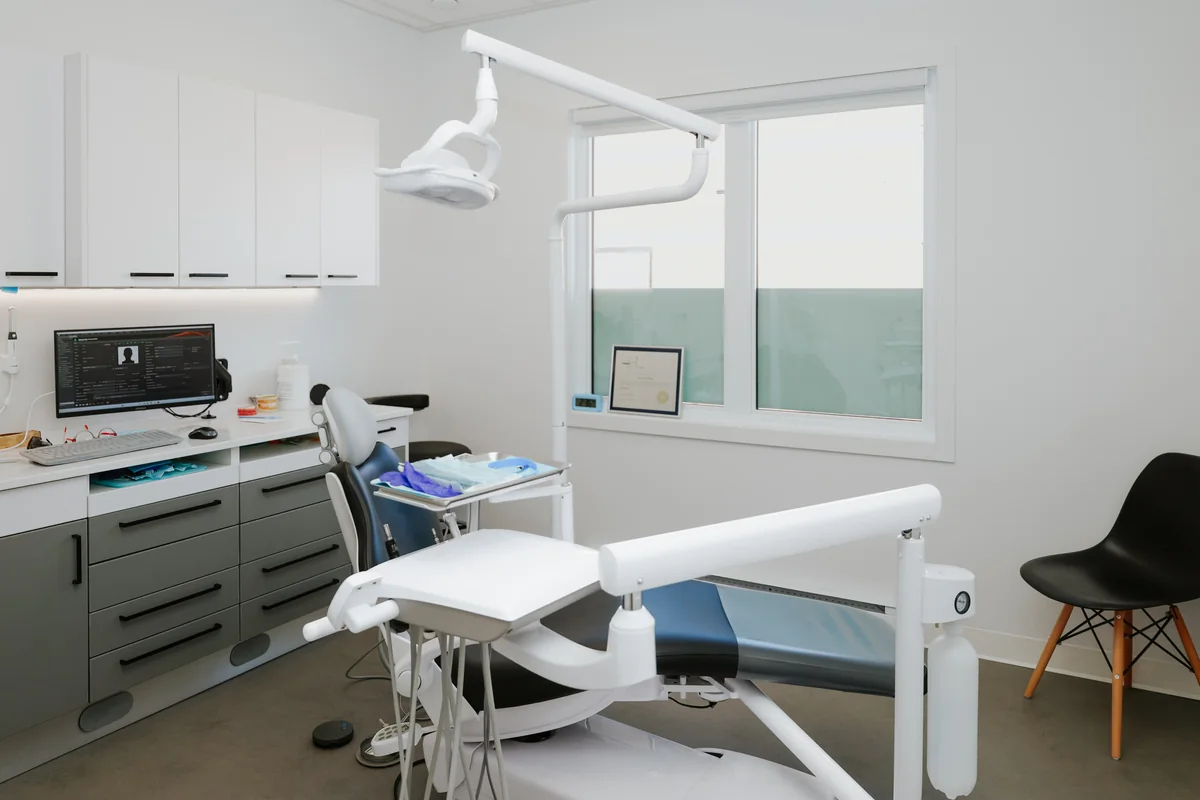
Why does treatment variety matter for the team?
Because it makes the work more interesting, develops rare skills (surgical assisting, implant prosthetics, endodontics) and raises each employee’s value on the market. A clinic limited to cleanings and fillings quickly caps your progression.
What is mechanized endodontics?
Root canal treatments performed with motorized rotary or reciprocating instruments, an apex locator and often thermoplastic obturation: faster, more predictable and more comfortable for the patient. For the assistant, it means a specific tray and precise coordination with the dentist. Learn more about root canals.
What does implantology change for an assistant?
Training in surgical assisting (sterile field, instruments, implant motor management), guide preparation and collaboration with the denturist for implant dentures. It is one of the most valued skills, along with digital impressions. See our dental implants.
And for a hygienist?
Follow-up of implant patients (peri-implant maintenance, adapted instruments), patient education and early detection of complications. Clinics that place implants need hygienists trained in periodontics and implant maintenance.
What are CAD/CAM and digital impressions?
Computer-aided design and manufacturing: the intraoral scanner replaces paste, and some clinics mill crowns on site. For the team, it means fewer redos, shorter appointments and rewarding technological learning.
Do clear aligners involve the team?
Yes: digital impressions, photos, appointment follow-up and patient education. A clinic offering aligner orthodontics and cosmetic injections broadens its services, which diversifies the daily routine of the front desk and the clinic alike.
Is a clinic that does everything more demanding?
More varied, above all: days alternate surgery, endodontics, hygiene and emergencies. Organization must keep up (rooms, trays, training). A clinic with seven general dentists and specialists joining, like Go Dentiste, spreads that variety across the whole team.
Who trains staff on these technologies?
The dentist, the equipment supplier and external courses (implant assisting, endodontics). A serious clinic plans these courses and pays for them. Ask which training the team took in the past year.
Do these technologies change pay?
Indirectly: an assistant trained in implant surgery or a hygienist specialized in periodontics negotiates better, and a dentist doing implantology produces more on a percentage basis. Advanced skills are the sector’s best salary lever.
How can you tell whether a clinic is truly advanced?
Look at its list of services (implants, mechanized root canals, aligners, panoramic or 3D), the year of its equipment and its team’s training. The Go Dentiste dental services page details the treatments offered in its clinics.
Go further
- Dental implant service at Go Dentiste
- Specializations and sought-after skills
- Dental career guide: the 1,000 questions
- All positions at Go Dentiste
Sources and references
- Gouvernement du Québec — Dental assistants: wages and outlook (IMT)
- Gouvernement du Québec — Dental hygienists: wages and outlook (IMT)
- Ordre des dentistes du Québec
Content prepared by the Go Dentiste team (Dr Dominic Morel-Maynard, general dentist and owner). Last updated: September 25, 2026. General information for guidance only: only an in-clinic exam can establish a diagnosis and a treatment plan suited to your situation.